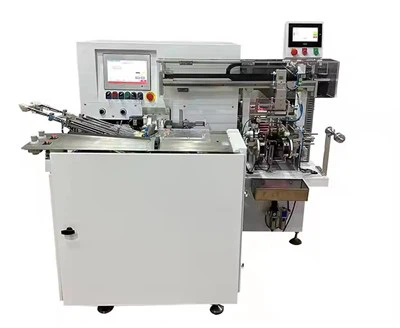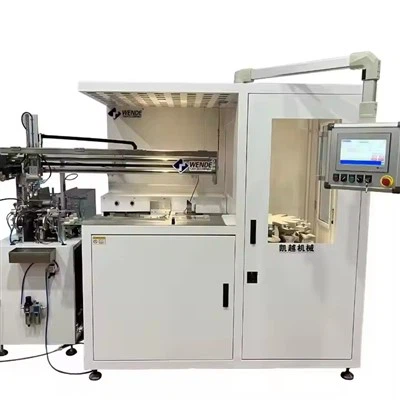

In the realm of household brush manufacturing, the demand for innovative and high - performance products is ever - growing. One question that frequently arises is whether a household brush making machine can produce brushes with a water - repellent bristle treatment. As a supplier of Household Brush Making Machine, I am well - positioned to explore this topic in depth.
Understanding Water - Repellent Bristle Treatment
Water - repellent bristle treatment is a process that modifies the surface properties of brush bristles to prevent water from adhering to them. This treatment is highly desirable in many household cleaning scenarios. For example, in kitchen brushes used for washing dishes, water - repellent bristles can dry faster, reducing the growth of bacteria and mold. Similarly, in bathroom brushes, they can resist water absorption, maintaining their shape and functionality over a longer period.
The science behind water - repellent treatment often involves the application of special coatings or chemical treatments to the bristles. These substances create a hydrophobic layer on the surface of the bristles, causing water to bead up and roll off rather than being absorbed.
Capabilities of Household Brush Making Machines
Modern household brush making machines are highly versatile pieces of equipment. They are designed to handle a wide range of bristle materials, including natural fibers, synthetic polymers, and blends. These machines are capable of performing multiple functions such as tufting, trimming, and shaping the brushes.
When it comes to water - repellent bristle treatment, household brush making machines can be integrated with additional processes. Some advanced machines can be equipped with coating stations where the bristles can be treated with water - repellent agents during the manufacturing process. This integration allows for a seamless production of brushes with water - repellent properties.
For instance, the Household Cleaning Brushes Tufting Machine can be customized to include a spraying or dipping mechanism for applying the water - repellent coating. The tufting process ensures that the bristles are firmly attached to the brush base, and the subsequent treatment can be precisely applied to achieve the desired level of water - repellency.
Factors Affecting the Production of Water - Repellent Brushes
Several factors need to be considered when using a household brush making machine to produce water - repellent brushes.
Bristle Material
The choice of bristle material plays a crucial role. Different materials have different surface properties and reactivity to water - repellent treatments. Synthetic materials such as nylon and polyester are often more receptive to chemical coatings compared to natural fibers like horsehair or hog bristle. However, with the right treatment, natural fibers can also achieve a certain degree of water - repellency.
Treatment Method
The method of applying the water - repellent treatment is also important. Spraying is a common method as it allows for a uniform application of the coating on the bristles. Dipping is another option, which can ensure a more thorough penetration of the treatment into the bristles. The household brush making machine needs to be configured to support the chosen treatment method.
Machine Compatibility
The machine must be compatible with the water - repellent agents used. Some chemicals may be corrosive or may require specific temperature and pressure conditions during application. The machine's components, such as the spraying nozzles or dipping tanks, need to be made of materials that can withstand the chemicals without degradation.
Advantages of Producing Water - Repellent Brushes
There are several advantages to producing brushes with water - repellent bristles.
Extended Lifespan
Water - repellent bristles dry faster, which reduces the risk of bristle damage due to prolonged exposure to moisture. This can significantly extend the lifespan of the brush, making it a more cost - effective option for consumers.
Hygiene
By preventing water absorption, water - repellent brushes are less likely to harbor bacteria and mold. This is particularly important in household cleaning, where hygiene is a top priority.
Improved Performance
In cleaning tasks, water - repellent bristles can provide better contact with the surface being cleaned. Since water does not cling to the bristles, they can more effectively pick up dirt and debris.
Case Studies
Let's look at some real - world examples of how household brush making machines have been used to produce water - repellent brushes.
A small - scale brush manufacturer used a CNC Broom Tufting Machine to produce brooms with water - repellent nylon bristles. By integrating a spraying system into the machine, they were able to apply a silicone - based water - repellent coating to the bristles during the tufting process. The resulting brooms were well - received in the market due to their long - lasting performance and hygienic properties.
Another manufacturer used a household cleaning brush tufting machine to produce dishwashing brushes with water - repellent polyester bristles. They used a dipping method to apply a fluoropolymer - based coating, which provided excellent water - repellency. These brushes were found to dry much faster than traditional brushes, reducing the growth of bacteria and extending their usable life.


Challenges and Solutions
While producing water - repellent brushes with household brush making machines is feasible, there are some challenges.
Cost
The cost of water - repellent agents and the additional equipment required for the treatment can be relatively high. However, by optimizing the production process and sourcing cost - effective materials, manufacturers can reduce these costs. For example, bulk purchasing of water - repellent agents and using energy - efficient machines can help lower the overall production cost.
Quality Control
Ensuring consistent quality of the water - repellent treatment is crucial. Variations in the coating thickness or uneven application can lead to inconsistent water - repellency. Implementing strict quality control measures, such as regular testing of the brushes for water - repellency using standardized methods, can help maintain high - quality production.
Conclusion
In conclusion, a household brush making machine can indeed produce brushes with a water - repellent bristle treatment. With the right combination of bristle material, treatment method, and machine configuration, manufacturers can create high - quality, water - repellent brushes that offer numerous advantages in terms of lifespan, hygiene, and performance.
As a supplier of household brush making machines, we are committed to providing our customers with the latest technology and solutions to meet their production needs. Whether you are looking to start a new brush manufacturing business or upgrade your existing production line to produce water - repellent brushes, our machines can be customized to suit your requirements.
If you are interested in learning more about our household brush making machines or discussing the production of water - repellent brushes, please feel free to contact us. We are ready to assist you in exploring the possibilities and achieving your production goals.
References
- "Surface Modification of Polymer Fibers for Hydrophobicity" - Journal of Applied Polymer Science
- "Advances in Brush Manufacturing Technology" - International Journal of Manufacturing Technology