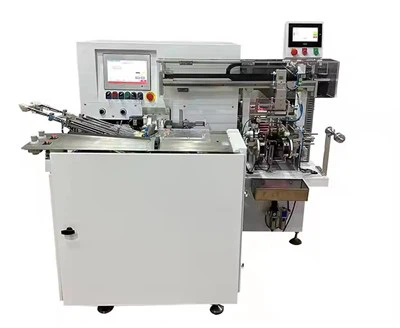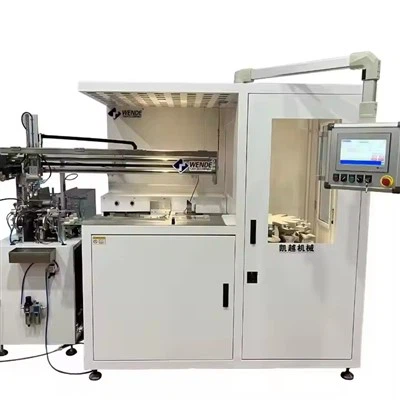

In the realm of modern manufacturing, precision and efficiency are the cornerstones of success. As a leading supplier of CNC Broom Tufting Machine, I've witnessed firsthand the transformative power of advanced technology in the tufting industry. One crucial aspect that often goes unnoticed but significantly impacts the quality and productivity of broom manufacturing is the tufting material feeding speed control of a CNC broom tufting machine.
Understanding the Basics of Tufting Material Feeding Speed
Tufting material feeding speed refers to the rate at which the tufting material, such as bristles or fibers, is fed into the tufting machine during the broom - making process. This speed is a critical parameter that affects multiple aspects of the final product, including its appearance, durability, and overall quality.
The feeding speed is typically measured in units of length per unit of time, such as millimeters per second. It is carefully calibrated to ensure that the bristles are inserted into the broom base at the right intervals and with the correct tension. If the feeding speed is too fast, the bristles may not be properly secured, leading to a loose and uneven broom. On the other hand, if the speed is too slow, the production rate will be significantly reduced, resulting in lower efficiency and higher costs.
Factors Influencing Tufting Material Feeding Speed
Several factors come into play when determining the optimal tufting material feeding speed for a CNC broom tufting machine.
Material Properties
The type and characteristics of the tufting material have a major influence on the feeding speed. Different materials, such as natural fibers, synthetic polymers, or a combination of both, have varying levels of flexibility, stiffness, and friction. For example, natural fibers like sisal may require a slower feeding speed due to their relative stiffness and the potential for breakage. In contrast, synthetic fibers like nylon can often be fed at a faster rate because of their more consistent properties and higher flexibility.
Broom Design
The design of the broom, including the pattern, density, and length of the bristles, also affects the feeding speed. A broom with a complex pattern or a high - density bristle arrangement may require a slower feeding speed to ensure accurate tufting. Similarly, longer bristles may need a more controlled feeding process to prevent tangling and ensure proper insertion.
Machine Capabilities
The technical specifications and capabilities of the CNC broom tufting machine itself play a crucial role. Modern machines are equipped with advanced control systems that can adjust the feeding speed based on the input parameters. However, the maximum and minimum feeding speeds are limited by the machine's mechanical components, such as the feeding mechanism, the tufting needles, and the drive system.
The Role of CNC Technology in Feeding Speed Control
CNC (Computer Numerical Control) technology has revolutionized the tufting industry by providing precise control over the tufting process, including the material feeding speed. With CNC technology, the feeding speed can be programmed and adjusted with high accuracy, allowing for greater flexibility and customization in broom manufacturing.
The CNC system uses a set of pre - programmed instructions to control the movement of the tufting needles and the feeding of the bristles. These instructions can be easily modified to accommodate different broom designs and material types. For example, if a customer requests a broom with a specific bristle pattern, the operator can simply input the new design parameters into the CNC system, and the machine will automatically adjust the feeding speed and other settings accordingly.
Moreover, CNC technology enables real - time monitoring and adjustment of the feeding speed. Sensors installed in the machine can detect any irregularities in the tufting process, such as a jammed bristle or a change in material tension. The CNC system can then make immediate adjustments to the feeding speed to correct the problem and ensure continuous production.
Benefits of Precise Feeding Speed Control
Precise control of the tufting material feeding speed offers several significant benefits for broom manufacturers.
Improved Product Quality
By ensuring that the bristles are inserted at the right intervals and with the correct tension, precise feeding speed control results in a higher - quality broom. The broom will have a more uniform appearance, better durability, and improved performance. This can lead to increased customer satisfaction and a stronger market position for the manufacturer.
Higher Productivity
Optimal feeding speed control allows for faster production rates without sacrificing quality. By reducing the time required to tuft each broom, manufacturers can increase their output and meet the growing demand for brooms in the market. This, in turn, can lead to higher profits and a more competitive business.
Cost Savings
Precise feeding speed control helps to minimize material waste. When the feeding speed is accurately calibrated, there is less chance of over - or under - tufting, which can result in the use of excess material. Additionally, by reducing the number of defective brooms due to improper tufting, manufacturers can save on production costs associated with rework and scrap.
Applications in the Industry
The ability to control the tufting material feeding speed is not only beneficial for broom manufacturing but also has applications in other related industries. For example, in the production of Electric Toothbrush Making Machine, precise feeding speed control is essential for ensuring the proper insertion of the toothbrush bristles. Similarly, in the manufacturing of Household Cleaning Brushes Tufting Machine, the feeding speed affects the quality and performance of the cleaning brushes.
Conclusion
In conclusion, the tufting material feeding speed control of a CNC broom tufting machine is a critical aspect of modern broom manufacturing. It is influenced by various factors, including material properties, broom design, and machine capabilities. With the help of CNC technology, manufacturers can achieve precise control over the feeding speed, leading to improved product quality, higher productivity, and cost savings.
As a supplier of CNC broom tufting machines, we are committed to providing our customers with the latest technology and solutions to meet their specific needs. Our machines are designed to offer precise feeding speed control, along with other advanced features, to ensure the highest level of performance and quality in broom manufacturing.
If you are interested in learning more about our CNC broom tufting machines or have any questions regarding tufting material feeding speed control, we encourage you to contact us for a detailed discussion. We look forward to partnering with you to take your broom manufacturing business to the next level.


References
- "Advanced Manufacturing Technologies in the Tufting Industry," Journal of Manufacturing Science, Volume 15, Issue 3.
- "CNC Technology and Its Applications in Brush Manufacturing," International Journal of Industrial Engineering, Volume 22, Issue 4.
- "The Impact of Material Properties on Tufting Process Parameters," Proceedings of the International Conference on Materials and Manufacturing, 2023.