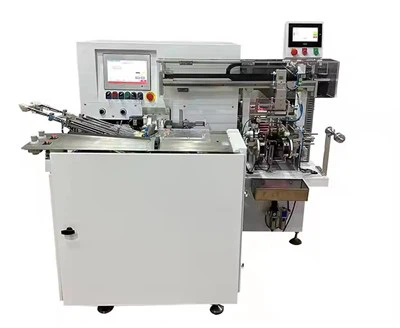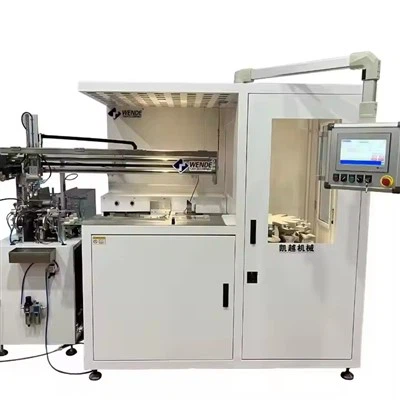

Hey there! As a supplier of toothbrush feeder machines, I'm super excited to chat with you about the feeding mode of these nifty devices. In this blog, I'll break down the different feeding modes, explain how they work, and share why they matter in the toothbrush manufacturing process.
Let's start with the basics. A toothbrush feeder machine is a key piece of equipment in toothbrush production. It's responsible for getting the bristles into the toothbrush head efficiently and accurately. There are several feeding modes available, each with its own unique features and benefits.
Manual Feeding Mode
First up, we've got the manual feeding mode. As the name suggests, this is a hands - on approach. Workers physically place the bristles into the toothbrush feeder machine. It's a simple method that doesn't require a lot of high - tech equipment.
Manual feeding can be pretty useful in small - scale production or when you're making custom - designed toothbrushes. You have a lot of control over the process, and you can quickly adjust the placement of the bristles if needed. However, it's also time - consuming and labor - intensive. Workers need to be careful and precise, as any mistakes can affect the quality of the toothbrush.
Semi - Automatic Feeding Mode
Next is the semi - automatic feeding mode. This mode combines some manual work with machine assistance. Workers still play a role in the process, but the machine helps with tasks like aligning the bristles and pushing them into place.
The semi - automatic mode is a great middle - ground. It speeds up the production process compared to manual feeding, while still allowing for some level of customization. For example, if you want to create toothbrushes with different bristle patterns, you can use the semi - automatic mode to make those adjustments easily. It's also more cost - effective than fully automatic machines for medium - sized production runs.
Fully Automatic Feeding Mode
Now, let's talk about the fully automatic feeding mode. This is the high - tech option that's becoming more and more popular in large - scale toothbrush manufacturing. In this mode, the machine takes care of everything from bristle loading to placement.
The fully automatic feeder tufting machine Fully Automatic Feeder Tufting Machine is a prime example of this technology. It uses advanced sensors and robotic arms to precisely place the bristles in the toothbrush head. This mode offers high - speed production, which means you can make a large number of toothbrushes in a short amount of time. It also ensures consistent quality, as the machine follows the same process every time.
One of the key advantages of the fully automatic mode is its efficiency. It reduces the need for manual labor, which can save on costs in the long run. Plus, it can handle complex bristle patterns and designs that might be difficult or impossible to achieve manually.
Special Holes Feeding Mode
There's also the special holes toothbrush tufting machine Special Holes Toothbrush Tufting Machine that uses a unique feeding mode. This machine is designed to create toothbrushes with special holes or patterns in the bristle arrangement.
The special holes feeding mode allows for greater innovation in toothbrush design. You can create toothbrushes that are more effective at cleaning hard - to - reach areas or that offer a different brushing experience. This mode is often used for high - end or specialized toothbrushes that target specific consumer needs.


High - Performance Feeding Mode
The high - performance toothbrush feeder machine High Performance Toothbrush Feeder Machine operates in a high - performance feeding mode. This mode is all about speed, precision, and reliability.
The machine is built with top - of - the - line components and advanced technology to ensure that it can handle large - volume production without sacrificing quality. It can work at high speeds while maintaining accurate bristle placement, which is crucial for meeting the demands of the market.
Why the Feeding Mode Matters
You might be wondering why the feeding mode of a toothbrush feeder machine is so important. Well, it all comes down to quality, efficiency, and cost.
The right feeding mode can significantly improve the quality of the toothbrushes you produce. For example, a fully automatic or high - performance feeding mode ensures that the bristles are placed evenly and securely, which makes the toothbrush more effective at cleaning teeth.
Efficiency is another key factor. A faster feeding mode means you can produce more toothbrushes in less time. This is especially important if you're trying to meet tight deadlines or if you're in a competitive market.
Cost is also a consideration. Manual and semi - automatic feeding modes might require more labor, which can increase production costs. On the other hand, fully automatic machines have a higher upfront cost but can save money in the long run by reducing labor and increasing productivity.
Choosing the Right Feeding Mode
So, how do you choose the right feeding mode for your toothbrush production? It depends on several factors, such as the scale of your production, the type of toothbrushes you want to make, and your budget.
If you're just starting out or making small - batch, custom toothbrushes, manual or semi - automatic feeding modes might be the best choice. They offer flexibility and control without a huge investment.
For large - scale production, fully automatic or high - performance feeding modes are usually the way to go. They can handle high volumes quickly and efficiently, which is essential for meeting market demand.
If you're looking to create innovative toothbrushes with special features, the special holes feeding mode could be a great option. It allows you to experiment with new designs and offer something unique to your customers.
Wrapping Up and Connecting
In conclusion, the feeding mode of a toothbrush feeder machine plays a crucial role in the toothbrush manufacturing process. Whether you're a small - scale producer or a large - scale manufacturer, there's a feeding mode that's right for you.
If you're interested in learning more about our toothbrush feeder machines or discussing which feeding mode would be best for your business, I'd love to hear from you. Feel free to reach out, and we can start a conversation about how we can help you take your toothbrush production to the next level.
References
- Industry reports on toothbrush manufacturing technology
- Interviews with toothbrush production experts