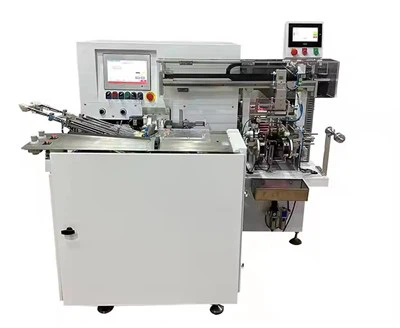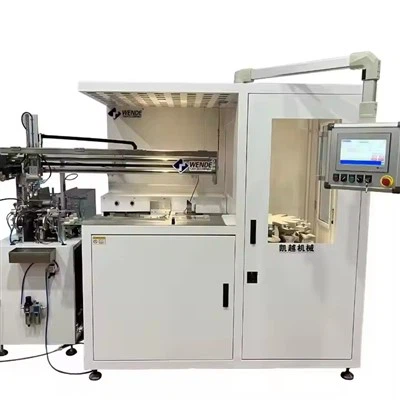

Hey there! As a supplier of Toothbrush Packaging Machinery, I've had the pleasure of diving deep into this industry. Today, I'm gonna break down the key components of toothbrush packaging machinery for you.
Let's start with the frame. The frame is like the backbone of the machine. It provides the structural support for all the other components. A well - built frame is crucial because it ensures the stability of the entire machine during operation. If the frame is flimsy, it can lead to vibrations, which might affect the accuracy of the packaging process. High - quality frames are usually made of strong metals like stainless steel. Stainless steel is not only durable but also resistant to corrosion, which is important since the machine might be exposed to various cleaning agents and environmental conditions.
Next up is the conveyor system. This is the part that moves the toothbrushes through the packaging process. Conveyor belts come in different types, such as flat belts, modular belts, and chain conveyors. Flat belts are simple and cost - effective, making them a popular choice for many toothbrush packaging lines. Modular belts, on the other hand, are more versatile and can be customized to fit different shapes and sizes of toothbrushes. Chain conveyors are great for heavy - duty applications where a lot of force is required to move the products. The conveyor system needs to be carefully calibrated to ensure that the toothbrushes are moving at the right speed and in the correct orientation.
The feeding mechanism is another vital component. It's responsible for getting the toothbrushes onto the conveyor belt in an orderly manner. There are several types of feeding mechanisms, including vibratory feeders and robotic pick - and - place systems. Vibratory feeders use vibration to move the toothbrushes along a track and into the packaging area. They're relatively inexpensive and can handle a large volume of toothbrushes. Robotic pick - and - place systems, however, are more precise and can handle complex packaging tasks. They use robotic arms to pick up the toothbrushes and place them exactly where they need to be.
Now, let's talk about the sealing unit. This is where the magic happens when it comes to actually packaging the toothbrushes. There are different sealing methods, such as heat sealing and ultrasonic sealing. Heat sealing uses heat to melt the packaging material and bond it together. It's a common method for sealing plastic bags and blister packs. Ultrasonic sealing, on the other hand, uses high - frequency sound waves to create a bond between the packaging materials. It's faster and more energy - efficient than heat sealing, and it can also provide a stronger seal. The sealing unit needs to be adjusted properly to ensure that the seals are strong enough to keep the toothbrushes protected but not so strong that they damage the packaging or the toothbrushes themselves.
The cutting mechanism is also important. After the toothbrushes are sealed in the packaging, the excess material needs to be cut off. There are different types of cutting mechanisms, such as rotary cutters and guillotine cutters. Rotary cutters are continuous - motion cutters that can cut through the packaging material quickly and smoothly. Guillotine cutters, on the other hand, use a sharp blade that moves up and down to make a clean cut. The choice of cutting mechanism depends on the type of packaging material and the production speed.
Another key component is the control system. This is the brain of the toothbrush packaging machine. It controls all the other components and ensures that the machine is operating smoothly and efficiently. The control system can be programmed to adjust the speed, temperature, and other parameters of the machine. Modern control systems often use touch - screen interfaces, which make it easy for operators to monitor and adjust the machine's settings. They can also provide real - time feedback on the machine's performance, such as the number of packages produced and any error messages.
The labeling system is also an important part of toothbrush packaging machinery. It's used to apply labels to the packaging, which can include product information, branding, and barcodes. There are different types of labeling systems, such as pressure - sensitive labeling and shrink - sleeve labeling. Pressure - sensitive labeling uses adhesive labels that are applied to the packaging using a roller or a dispenser. Shrink - sleeve labeling involves applying a plastic sleeve around the packaging and then shrinking it using heat. The labeling system needs to be accurate and reliable to ensure that the labels are applied correctly and look professional.
At our company, we offer a wide range of Toothbrush Packaging Machinery that incorporate all these key components. Our Toothbrush Blister Packaging Machine is designed to provide a high - quality blister packaging solution for toothbrushes. It uses advanced sealing and cutting technology to ensure that the blister packs are strong and secure. Our Toothbrush CNC Combination Machine combines multiple functions into one machine, making it a cost - effective and efficient solution for toothbrush packaging.


If you're in the market for toothbrush packaging machinery, we'd love to have a chat with you. Whether you're a small - scale manufacturer or a large - scale production facility, we can help you find the right machine for your needs. Contact us to start the discussion and let's work together to take your toothbrush packaging to the next level.
References
- Industry reports on toothbrush packaging machinery
- Technical manuals of various toothbrush packaging machines