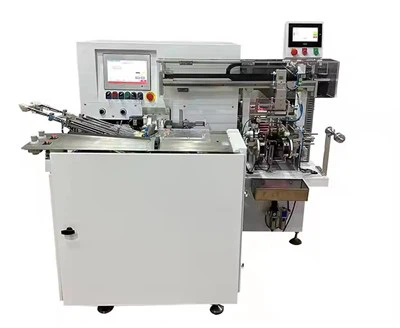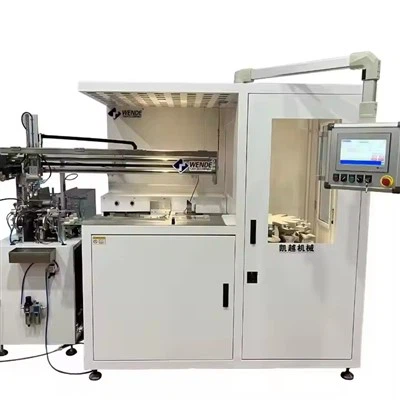

Hey there! As a supplier of CNC toothbrush machines, I often get asked about the acceleration and deceleration performance of these machines. It's a crucial aspect that can significantly impact the efficiency and quality of toothbrush production. So, let's dive right in and explore what makes the acceleration and deceleration of a CNC toothbrush machine so important.
Understanding Acceleration in CNC Toothbrush Machines
Acceleration refers to how quickly a machine can increase its speed from a standstill or a lower speed to a higher one. In the context of a CNC toothbrush machine, acceleration plays a vital role in determining how fast the machine can start the production process. A machine with good acceleration can quickly reach its optimal operating speed, reducing the time wasted in ramping up.


Imagine you're running a toothbrush manufacturing business. Time is money, and every second counts. If your CNC toothbrush machine has a slow acceleration, it will take longer to get up to speed, which means less production output in a given time frame. On the other hand, a machine with high acceleration can start producing toothbrushes at a faster pace, allowing you to meet your production targets more efficiently.
One of the factors that affect the acceleration of a CNC toothbrush machine is the motor. A powerful motor can provide the necessary torque to quickly increase the machine's speed. Additionally, the control system of the machine also plays a crucial role. A well-designed control system can precisely manage the power delivery to the motor, ensuring smooth and rapid acceleration.
The Importance of Deceleration
Deceleration, on the other hand, is the process of reducing the machine's speed. It's just as important as acceleration, especially when it comes to the quality of the toothbrushes produced. When a CNC toothbrush machine is in operation, it needs to slow down smoothly and precisely at the end of each production cycle or when making adjustments.
If the deceleration is too abrupt, it can cause damage to the machine's components and the toothbrushes themselves. For example, if the machine stops suddenly while trimming the bristles of a toothbrush, it can result in uneven cuts or even breakage of the bristles. On the contrary, a smooth deceleration allows the machine to come to a stop gently, ensuring the integrity of the toothbrushes and the longevity of the machine.
Another aspect where deceleration is crucial is in energy conservation. A machine that can decelerate efficiently can recover some of the energy that would otherwise be wasted during the braking process. This not only reduces the energy consumption of the machine but also helps in lowering the overall production costs.
Measuring Acceleration and Deceleration Performance
To evaluate the acceleration and deceleration performance of a CNC toothbrush machine, several parameters are considered. One of the most common metrics is the time it takes for the machine to reach its maximum speed (acceleration time) and the time it takes to come to a complete stop (deceleration time).
In addition to time, the smoothness of the acceleration and deceleration is also important. A machine that accelerates and decelerates smoothly without any jerks or vibrations is generally considered to have better performance. This can be measured using sensors and monitoring systems that can detect any irregularities in the machine's movement.
Another factor to consider is the repeatability of the acceleration and deceleration. A high-quality CNC toothbrush machine should be able to consistently achieve the same acceleration and deceleration times and profiles, ensuring consistent production quality.
Impact on Toothbrush Production Quality
The acceleration and deceleration performance of a CNC toothbrush machine can have a direct impact on the quality of the toothbrushes produced. As mentioned earlier, a smooth and precise acceleration and deceleration process can prevent damage to the toothbrushes during production.
For example, when the machine is inserting the bristles into the toothbrush head, a sudden change in speed can cause the bristles to be inserted unevenly or at the wrong angle. This can affect the brushing performance of the toothbrush and make it less effective in cleaning teeth. On the other hand, a machine with good acceleration and deceleration control can ensure that the bristles are inserted accurately and uniformly, resulting in high-quality toothbrushes.
Moreover, the acceleration and deceleration performance can also affect the surface finish of the toothbrush. A machine that can accelerate and decelerate smoothly can produce toothbrushes with a more consistent and smooth surface, enhancing the overall aesthetic appeal of the product.
Our CNC Toothbrush Machines: Superior Acceleration and Deceleration
At our company, we understand the importance of acceleration and deceleration performance in CNC toothbrush machines. That's why we've invested heavily in research and development to ensure that our machines offer the best possible performance in this regard.
Our machines are equipped with high-power motors and advanced control systems that enable rapid and smooth acceleration. The control system is designed to precisely manage the power delivery to the motor, ensuring that the machine can reach its optimal operating speed in the shortest possible time.
When it comes to deceleration, our machines are equally impressive. They are equipped with advanced braking systems that allow for smooth and controlled deceleration. The braking system can recover some of the energy during the deceleration process, reducing the energy consumption of the machine.
In addition to superior acceleration and deceleration performance, our CNC toothbrush machines also offer a range of other features and benefits. For example, they are highly customizable, allowing you to produce toothbrushes of different shapes, sizes, and designs. They also come with user-friendly interfaces that make it easy to operate and maintain the machines.
Related Products and Solutions
If you're interested in learning more about our toothbrush manufacturing solutions, we have a range of products and services to offer. Check out our Toothbrush Complete Solution, which provides a comprehensive package for toothbrush production. It includes everything from the CNC toothbrush machine to the necessary tools and accessories.
We also offer Industrial Brush Making Machine for those who need to produce industrial brushes in addition to toothbrushes. These machines are designed to handle high-volume production and offer excellent performance and reliability.
For those looking for a more specialized solution, our Aluminum Machinery Toothbrush is a great option. It is specifically designed for producing toothbrushes with aluminum components, offering a unique and high-quality product.
Conclusion
In conclusion, the acceleration and deceleration performance of a CNC toothbrush machine is a critical factor that can significantly impact the efficiency and quality of toothbrush production. A machine with good acceleration can quickly reach its optimal operating speed, while smooth deceleration ensures the integrity of the toothbrushes and the longevity of the machine.
At our company, we are committed to providing our customers with the best possible CNC toothbrush machines that offer superior acceleration and deceleration performance. If you're in the market for a high-quality CNC toothbrush machine, we'd love to hear from you. Contact us today to discuss your requirements and find out how our machines can help you take your toothbrush production to the next level.
References
- "CNC Machine Tool Technology" by Patrick W. Smith
- "Industrial Automation: Principles and Applications" by Thomas H. Lee