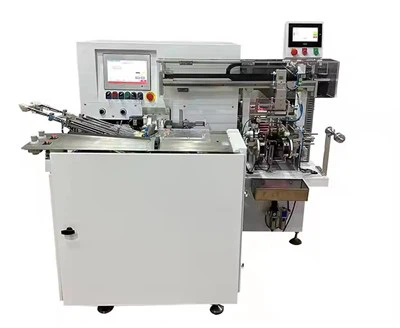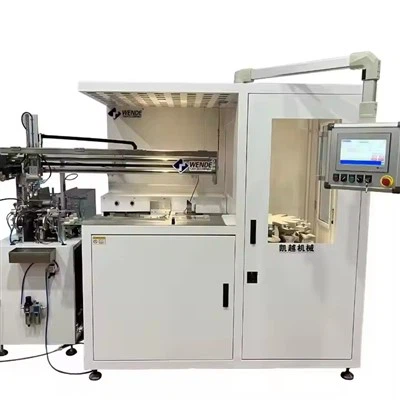

Hey there! As a supplier of toothbrush feeder machines, I often get asked about the pneumatic requirements for these nifty devices. So, I thought I'd sit down and share some insights on this topic.
First off, let's understand what a toothbrush feeder machine does. It's a crucial part of the toothbrush manufacturing process. These machines are responsible for feeding toothbrush components, like handles or bristles, to the next stage of production in an efficient and consistent manner. And pneumatics play a huge role in making this happen smoothly.
The Basics of Pneumatics in Toothbrush Feeder Machines
Pneumatics is all about using compressed air to generate motion and force. In the context of a toothbrush feeder machine, compressed air is used to power various components such as cylinders, valves, and actuators. These components help in tasks like moving the toothbrush parts, sorting them, and positioning them correctly for further processing.
One of the key pneumatic requirements is the air pressure. The right air pressure is essential for the proper functioning of the machine. Too low, and the machine might not be able to move the toothbrush parts effectively. Too high, and it could cause damage to the components or even the toothbrushes themselves.
Typically, toothbrush feeder machines require an air pressure in the range of 4 - 8 bar. This range allows for sufficient force to move the parts without causing excessive wear and tear. However, the exact pressure needed can vary depending on the specific design of the machine and the type of toothbrush components it's handling.
Air Flow and Volume
Apart from air pressure, air flow and volume are also important pneumatic requirements. The air flow determines how quickly the compressed air can reach the different parts of the machine. A sufficient air flow ensures that the cylinders and actuators can move rapidly, which is crucial for maintaining a high production rate.
The volume of air needed depends on the number of pneumatic components in the machine and their size. Larger cylinders and actuators require more air volume to operate effectively. It's important to have a compressor that can supply the required air volume continuously to avoid any interruptions in the production process.
Air Quality
Another critical pneumatic requirement is the quality of the compressed air. The air used in the toothbrush feeder machine should be clean and dry. Any moisture or contaminants in the air can cause problems such as corrosion, clogging of valves, and malfunction of the pneumatic components.
To ensure clean and dry air, it's necessary to use air treatment equipment such as filters, dryers, and regulators. Filters remove any solid particles from the air, while dryers remove moisture. Regulators help in maintaining a stable air pressure.
Pneumatic Components and Their Requirements
Let's take a closer look at some of the specific pneumatic components used in toothbrush feeder machines and their requirements.
Cylinders
Cylinders are used to convert the energy of compressed air into linear motion. They come in different sizes and types, such as single-acting and double-acting cylinders. The requirements for cylinders include proper lubrication to reduce friction and wear, and the right seal materials to prevent air leakage.
Valves
Valves control the flow of compressed air in the machine. There are different types of valves, such as solenoid valves and directional control valves. These valves need to be able to operate quickly and accurately to ensure precise control of the pneumatic system.
Actuators
Actuators are used to perform specific tasks such as gripping, sorting, and positioning the toothbrush components. They require a reliable supply of compressed air to function properly. The force and speed of the actuators can be adjusted by controlling the air pressure and flow.
Impact of Pneumatic Requirements on Machine Performance
Meeting the pneumatic requirements has a direct impact on the performance of the toothbrush feeder machine. When the air pressure, flow, volume, and quality are all within the right parameters, the machine can operate smoothly and efficiently. This leads to a higher production rate, better quality of the toothbrushes, and reduced maintenance costs.


On the other hand, if the pneumatic requirements are not met, the machine might experience problems such as slow operation, misalignment of the toothbrush parts, and frequent breakdowns. This can result in lower productivity and increased production costs.
Our Toothbrush Feeder Machines and Pneumatic Solutions
At our company, we understand the importance of meeting the pneumatic requirements for toothbrush feeder machines. That's why we design our machines to be highly efficient and reliable, with a focus on optimizing the pneumatic system.
Our High Performance Toothbrush Feeder Machine is a prime example. It's equipped with advanced pneumatic components that are carefully selected to ensure the right air pressure, flow, and volume. This allows for a smooth and continuous feeding process, even at high production speeds.
We also offer the Special Holes Toothbrush Tufting Machine, which has specific pneumatic requirements for its tufting process. Our engineers have designed the machine to meet these requirements, resulting in precise and consistent tufting.
And for those looking for a solution for bamboo toothbrush handles, our Automatic Bamboo ToothbrushHandle Feeding Machine is the perfect choice. It's designed to handle the unique characteristics of bamboo handles while maintaining the required pneumatic performance.
Conclusion
In conclusion, the pneumatic requirements for a toothbrush feeder machine are crucial for its proper functioning. Air pressure, flow, volume, and quality all play important roles in ensuring a high production rate, good quality of the toothbrushes, and long-term reliability of the machine.
If you're in the market for a toothbrush feeder machine, or if you have any questions about the pneumatic requirements, don't hesitate to get in touch. We're here to help you find the right solution for your toothbrush manufacturing needs.
References
- Pneumatic Systems Handbook
- Toothbrush Manufacturing Technology Manual