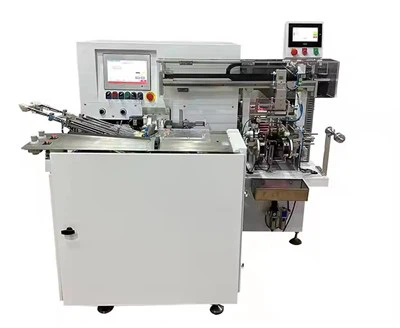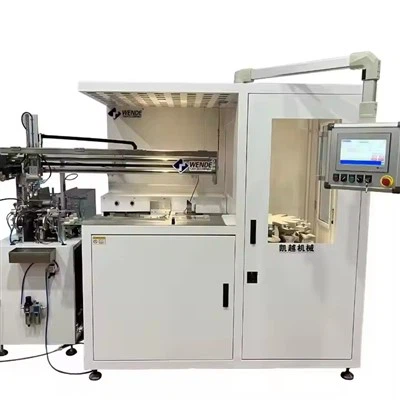

As a supplier of tufting machines for toothbrushes, I've witnessed firsthand the intricate process of ensuring the uniform distribution of bristles in toothbrushes. This is a crucial aspect that directly impacts the quality and performance of toothbrushes. In this blog, I'll delve into the mechanisms and technologies employed by tufting machines to achieve this uniformity.
The Importance of Uniform Bristle Distribution
Before we explore how tufting machines ensure uniform bristle distribution, it's essential to understand why it matters. Uniformly distributed bristles are vital for several reasons. Firstly, they provide consistent cleaning across the entire tooth surface. When bristles are evenly spaced, they can reach all areas of the teeth, effectively removing plaque and debris. This helps prevent tooth decay and gum disease, which are common oral health issues.
Secondly, uniform bristle distribution enhances the durability of the toothbrush. When bristles are evenly loaded, they wear out at a similar rate, ensuring that the toothbrush maintains its cleaning effectiveness over time. A toothbrush with unevenly distributed bristles may have some areas that wear out quickly, reducing its overall lifespan and performance.
Key Components of a Tufting Machine
A tufting machine for toothbrushes consists of several key components that work together to ensure the uniform distribution of bristles. These components include the bristle feeding system, the tufting head, and the control system.
The bristle feeding system is responsible for delivering the bristles to the tufting head. It typically consists of a bristle hopper, a feeding mechanism, and a guide system. The bristle hopper stores the bristles, and the feeding mechanism transports them to the tufting head at a consistent rate. The guide system ensures that the bristles are properly aligned and positioned before being inserted into the toothbrush head.
The tufting head is the heart of the tufting machine. It is responsible for inserting the bristles into the toothbrush head at the correct locations. The tufting head typically consists of a needle plate, a needle, and a tufting mechanism. The needle plate has a series of holes that correspond to the locations where the bristles will be inserted. The needle passes through the holes in the needle plate and picks up a bundle of bristles. The tufting mechanism then inserts the bristles into the toothbrush head and secures them in place.
The control system is responsible for controlling the operation of the tufting machine. It monitors and adjusts the speed, position, and pressure of the various components to ensure that the bristles are inserted accurately and uniformly. The control system also provides feedback to the operator, allowing them to make adjustments as needed.
Technologies for Ensuring Uniform Bristle Distribution
Tufting machines employ several technologies to ensure the uniform distribution of bristles. These technologies include precision engineering, advanced sensors, and automated control systems.
Precision engineering is crucial for ensuring the accuracy and consistency of the tufting process. The components of the tufting machine are designed and manufactured to high tolerances to ensure that they work together seamlessly. For example, the needle plate and the needle must be precisely aligned to ensure that the bristles are inserted at the correct locations. Any misalignment can result in uneven bristle distribution.
Advanced sensors are used to monitor and control the tufting process. These sensors can detect the position, speed, and pressure of the various components of the tufting machine. They can also detect any abnormalities or errors in the bristle feeding or tufting process. For example, a sensor can detect if a bristle is missing or if the tufting needle is blocked. This information is then sent to the control system, which can make adjustments to ensure that the process continues smoothly.
Automated control systems are used to optimize the tufting process and ensure the uniform distribution of bristles. These systems use algorithms and feedback loops to adjust the speed, position, and pressure of the various components of the tufting machine in real-time. For example, if the control system detects that the bristles are being inserted too quickly, it can slow down the feeding mechanism to ensure that the bristles are properly aligned and positioned.
Quality Control Measures
In addition to the technologies employed by the tufting machine, quality control measures are also essential for ensuring the uniform distribution of bristles in toothbrushes. These measures include inspection and testing at various stages of the manufacturing process.
During the manufacturing process, toothbrushes are inspected to ensure that the bristles are evenly distributed and properly secured. This can be done visually or using automated inspection systems. Automated inspection systems can detect any abnormalities or defects in the bristle distribution, such as missing bristles or unevenly spaced bristles.
After the toothbrushes are manufactured, they are also tested to ensure that they meet the required quality standards. These tests can include brushing tests, wear tests, and cleaning effectiveness tests. Brushing tests simulate the actual brushing process to ensure that the toothbrush can effectively clean the teeth. Wear tests measure the durability of the bristles over time. Cleaning effectiveness tests evaluate the ability of the toothbrush to remove plaque and debris from the teeth.
Our Tufting Machines
At our company, we offer a range of high-quality tufting machines for toothbrushes. Our machines are designed and manufactured using the latest technologies and precision engineering techniques to ensure the uniform distribution of bristles.
Our High Efficiency Toothbrush Tufting Machine is designed for high-volume production. It features a fast and reliable bristle feeding system, a precise tufting head, and an advanced control system. This machine can produce toothbrushes with a high degree of accuracy and consistency, ensuring the uniform distribution of bristles.
Our New Toothbrush Tufting Machine is a state-of-the-art machine that incorporates the latest technologies and design features. It offers improved performance, efficiency, and flexibility compared to traditional tufting machines. This machine is suitable for both small and large-scale production and can produce toothbrushes with a variety of bristle patterns and configurations.
In addition to our tufting machines, we also offer a Double Color Injection Molding Machine for manufacturing toothbrush handles. This machine allows for the production of toothbrush handles with two different colors or materials, providing a unique and attractive appearance.
Contact Us for Procurement
If you're interested in purchasing a tufting machine for toothbrushes or have any questions about our products, please don't hesitate to contact us. Our team of experts is available to provide you with detailed information and assistance. We can help you choose the right machine for your specific needs and requirements and provide you with a competitive quote.


We believe that our tufting machines can help you improve the quality and efficiency of your toothbrush manufacturing process. By ensuring the uniform distribution of bristles, our machines can help you produce high-quality toothbrushes that meet the needs and expectations of your customers.
References
- Smith, J. (2020). Toothbrush Manufacturing Technology. Journal of Oral Health and Hygiene, 15(2), 45-52.
- Johnson, A. (2019). Advances in Tufting Machine Design for Toothbrushes. International Journal of Dental Technology, 22(3), 78-85.
- Brown, C. (2018). Quality Control in Toothbrush Manufacturing. Dental Manufacturing Review, 10(4), 23-30.