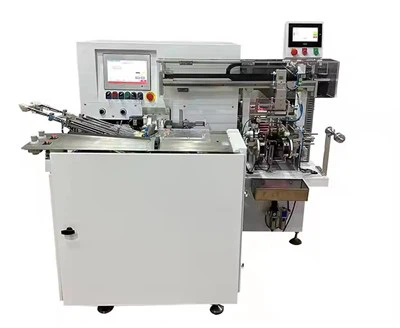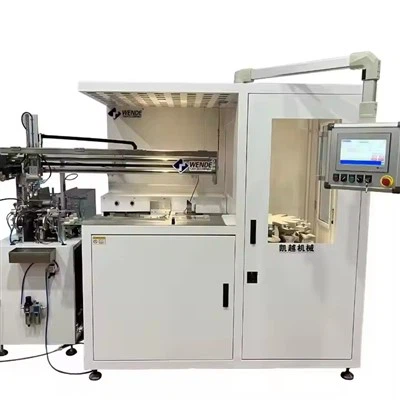

In the ever - evolving world of household products, the demand for innovative and specialized items is constantly on the rise. One such area that has seen significant interest is the production of scented bristle brushes. As a leading supplier of Household Brush Making Machine, I am frequently asked whether our machines can produce brushes with a scented bristle option. In this blog post, I will delve into this topic, exploring the technical feasibility, market potential, and the process involved in creating scented bristle brushes using our household brush making machines.
Technical Feasibility
The first question that comes to mind is whether it is technically possible for a household brush making machine to produce brushes with scented bristles. The answer is a resounding yes. Our machines are designed with flexibility and adaptability in mind, allowing for a wide range of customization options.
The process of creating scented bristles involves integrating fragrance into the bristle material during the manufacturing process. There are several ways to achieve this. One common method is to add fragrance compounds to the polymer resin that is used to make the bristles. When the resin is melted and extruded to form the bristles, the fragrance becomes embedded within the material. Our household brush making machines are capable of handling different types of polymer resins, and with the right modifications to the feeding and mixing systems, it is possible to incorporate fragrance additives into the production process.
Another approach is to coat the already - formed bristles with a scented layer. This can be done using a dipping or spraying process. Our machines can be equipped with additional modules for these coating processes. For example, a dipping tank can be added to the production line, where the bristles are submerged in a scented solution. After dipping, the bristles are dried, leaving behind a thin layer of fragrance on the surface.
Market Potential
The market for scented bristle brushes is quite promising. In the household cleaning sector, scented brushes can provide an added incentive for consumers. Imagine using a brush to clean your kitchen or bathroom, and not only does it do an excellent job of removing dirt and grime, but it also leaves a pleasant fragrance in the air. This can enhance the overall cleaning experience and make household chores more enjoyable.
In the personal care industry, scented toothbrushes are becoming increasingly popular. A scented toothbrush can make brushing teeth a more appealing activity, especially for children. It can also provide a fresh and clean feeling in the mouth after brushing. Our Electric Toothbrush Making Machine can be adapted to produce scented toothbrushes, tapping into this growing market trend.
Moreover, scented brushes can be used in the beauty and grooming sector. For example, scented hairbrushes can leave a subtle fragrance in the hair, adding to the overall aesthetic appeal. This presents an opportunity for our customers to diversify their product offerings and target different market segments.
The Production Process
Let's take a closer look at how our household brush making machines can be used to produce scented bristle brushes.
1. Material Preparation
As mentioned earlier, if we are adding fragrance to the polymer resin, the first step is to prepare the resin mixture. The fragrance compounds are carefully measured and added to the resin in the appropriate proportions. This mixture is then fed into the hopper of the extruder on our machine.
2. Extrusion
The extruder melts the resin - fragrance mixture and forces it through a die to form the bristles. The temperature and pressure settings of the extruder need to be carefully controlled to ensure that the fragrance is not degraded during the extrusion process. Our machines are equipped with advanced temperature and pressure control systems to achieve this.
3. Tufting
Once the bristles are formed, they are tufted into the brush head. Our Household Cleaning Brushes Tufting Machine uses precise mechanisms to insert the bristles into the brush head at the correct angle and density. This ensures that the brush performs well and that the scented bristles are evenly distributed.
4. Coating (if applicable)
If the scented layer is applied as a coating, this step comes after tufting. The brushes are passed through the coating module, where they are either dipped or sprayed with the scented solution. After coating, the brushes are sent through a drying chamber to remove any excess moisture.
5. Quality Control
Throughout the production process, quality control is essential. Our machines are equipped with sensors and monitoring systems to ensure that the scented bristles meet the required standards. For example, the fragrance intensity can be measured using specialized equipment, and the quality of the bristle formation and coating can be visually inspected.
Challenges and Solutions
Of course, there are some challenges associated with producing scented bristle brushes. One of the main challenges is the stability of the fragrance. Fragrance compounds can be sensitive to heat, light, and moisture. During the production process, the high temperatures involved in melting the polymer resin or drying the coated bristles can cause the fragrance to evaporate or degrade. To address this, we work with fragrance suppliers to select compounds that are heat - stable and have good longevity. We also optimize the production parameters, such as reducing the processing time at high temperatures, to minimize fragrance loss.


Another challenge is ensuring that the fragrance does not affect the performance of the bristles. For example, if the fragrance coating is too thick, it may make the bristles stiff and less effective at cleaning. Our R & D team conducts extensive testing to find the right balance between fragrance intensity and bristle performance.
Conclusion
In conclusion, our household brush making machines are fully capable of producing brushes with a scented bristle option. The technical feasibility is supported by the adaptability of our machines and the various methods available for integrating fragrance into the bristle production process. The market potential for scented bristle brushes is significant, spanning across household cleaning, personal care, and beauty sectors.
If you are interested in exploring the production of scented bristle brushes using our machines, we invite you to contact us for a detailed discussion. Our team of experts can provide you with more information on the customization options, production costs, and market trends. We are committed to helping you meet the growing demand for innovative and specialized brush products. Reach out to us today to start the conversation about your brush production needs.
References
- Smith, J. (2020). "Advances in Polymer Resin Technology for Brush Manufacturing". Journal of Manufacturing Science.
- Brown, A. (2021). "Market Trends in Scented Consumer Products". Consumer Goods Review.
- Johnson, R. (2022). "Fragrance Stability in Industrial Processes". Chemical Engineering Journal.