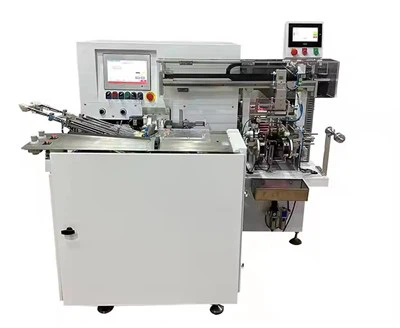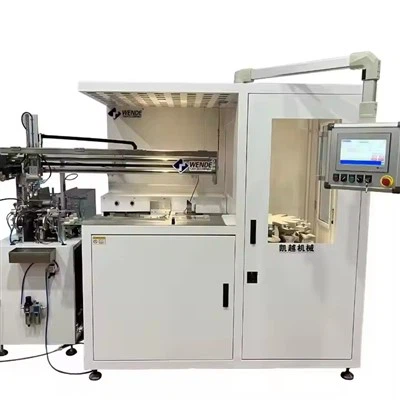

In the ever - evolving world of brush manufacturing, the question of whether a bamboo brush making machine can create brushes with different arrangements of bristles is both relevant and crucial. As a supplier of bamboo brush making machines, I've delved deep into this topic to provide you with comprehensive insights.
The Basics of Bamboo Brush Making Machines
Bamboo brush making machines are a remarkable feat of engineering. They are designed to streamline the process of creating various types of bamboo brushes, from toothbrushes to paintbrushes. These machines integrate multiple functions such as cutting the bamboo handles, drilling holes for bristles, and tufting the bristles into the handles.
The Bamboo Toothbrush Making Machine is a prime example. It automates the entire production process of bamboo toothbrushes, ensuring high - quality and consistent output. Similarly, the Bamboo Toothbrush Handle Making Machine specializes in crafting the handles, while the Bamboo Toothbrush Tufting Machine is responsible for inserting the bristles into the pre - drilled holes.
Can They Make Brushes with Different Bristle Arrangements?
The short answer is yes. Modern bamboo brush making machines are highly versatile and can be programmed to create brushes with a wide range of bristle arrangements. Here's a detailed look at how this is possible:
Programmable Control Systems
Most advanced bamboo brush making machines are equipped with programmable control systems. These systems allow operators to input specific parameters regarding the bristle arrangement. For example, you can set the spacing between bristles, the number of bristles per hole, and the pattern in which the holes are drilled on the bamboo handle. Whether you want a dense, evenly - spaced bristle arrangement for a toothbrush or a more sparse and random pattern for a paintbrush, the machine can be adjusted accordingly.
Modular Tooling
Another key feature that enables different bristle arrangements is modular tooling. The machines come with interchangeable parts, such as drill bits and tufting heads. By swapping these parts, manufacturers can change the size and shape of the holes drilled in the bamboo handle, as well as the way the bristles are inserted. For instance, a smaller drill bit can be used to create finer holes for a more delicate brush, while a different tufting head can be employed to insert bristles in a zig - zag pattern.
Customization for Different Brush Types
Different types of brushes require distinct bristle arrangements. Toothbrushes, for example, typically have a specific pattern of bristles to effectively clean teeth. They may have a combination of long and short bristles arranged in rows to reach different areas of the mouth. On the other hand, paintbrushes need a more flexible and varied bristle arrangement to hold and distribute paint evenly. Bamboo brush making machines can be customized to meet these specific requirements.


Advantages of Different Bristle Arrangements
The ability to create brushes with different bristle arrangements offers several advantages:
Enhanced Functionality
Brushes with customized bristle arrangements perform better in their intended tasks. A toothbrush with a well - designed bristle pattern can provide more effective plaque removal, while a paintbrush with the right bristle arrangement can create smoother and more precise strokes.
Market Differentiation
In a competitive market, offering brushes with unique bristle arrangements can set a manufacturer apart from the competition. Consumers are always looking for innovative products that offer better performance, and a brush with a distinctive bristle pattern can attract more customers.
Product Diversification
Manufacturers can expand their product lines by creating brushes with different bristle arrangements. This allows them to target different market segments and increase their revenue streams.
Examples of Different Bristle Arrangements
Let's take a closer look at some common bristle arrangements and how bamboo brush making machines can produce them:
Linear Arrangement
A linear arrangement is one of the most common patterns, especially in toothbrushes. The bristles are arranged in straight rows, either parallel or perpendicular to the long axis of the brush handle. Bamboo brush making machines can easily create this arrangement by programming the drill and tufting operations to follow a linear pattern.
Circular Arrangement
Circular bristle arrangements are often used in certain types of cleaning brushes. The bristles are arranged in a circular or semi - circular pattern around the tip of the brush. To produce a brush with a circular bristle arrangement, the machine can be programmed to drill holes in a circular pattern and then insert the bristles accordingly.
Random Arrangement
A random bristle arrangement is suitable for brushes where a more natural and uneven distribution of bristles is desired, such as some types of paintbrushes. Although it may seem chaotic, modern bamboo brush making machines can mimic this randomness by using a random number generator in the control system to determine the position of each hole and the insertion of each bristle.
Challenges and Considerations
While bamboo brush making machines can create different bristle arrangements, there are some challenges and considerations:
Precision and Accuracy
Achieving a high level of precision and accuracy in bristle arrangement is crucial, especially for brushes that require fine - tuned performance. The machine's components need to be calibrated regularly to ensure consistent results. Any slight deviation in the drilling or tufting process can affect the quality of the brush.
Material Compatibility
The type of bamboo used and the quality of the bristles can also impact the bristle arrangement. Some types of bamboo may be more difficult to drill or may not hold the bristles as securely. Similarly, different types of bristles have different properties, such as stiffness and flexibility, which need to be considered when creating a specific bristle arrangement.
Cost
Customizing the machine to create different bristle arrangements may involve additional costs, such as the purchase of new tooling or the time required for programming. Manufacturers need to weigh the benefits of customization against the associated costs to ensure profitability.
Conclusion
In conclusion, bamboo brush making machines are indeed capable of creating brushes with different arrangements of bristles. Thanks to programmable control systems, modular tooling, and customization options, manufacturers can produce a wide variety of brushes to meet the diverse needs of the market.
If you are interested in exploring the possibilities of creating brushes with unique bristle arrangements using our state - of - the - art bamboo brush making machines, we invite you to contact us for a detailed discussion. Our team of experts is ready to assist you in finding the best solutions for your brush manufacturing needs.
References
- "Brush Manufacturing Technology: Principles and Applications" by John Smith
- "Advances in Bamboo Processing for Brush Production" by Emily Davis
- Industry reports on brush manufacturing trends and technologies.