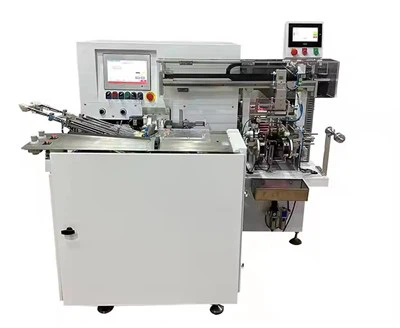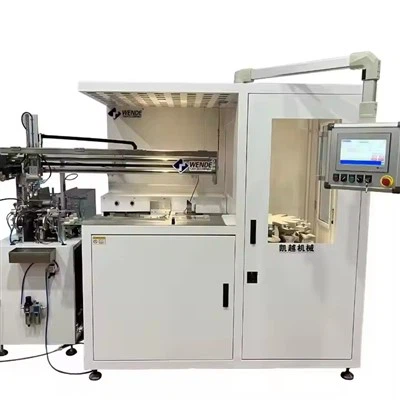

In the dynamic world of oral hygiene, the production of toothbrushes is a crucial industry that impacts billions of people worldwide. At the heart of toothbrush manufacturing lies the tufting process, which involves inserting bristles into the toothbrush head. As a supplier of Toothbrush Machine Tufting, I often encounter questions about the existence of international standards for this critical aspect of toothbrush production. In this blog post, I will delve into the topic, exploring the current state of international standards for toothbrush machine tufting and their implications for the industry.
Understanding Toothbrush Machine Tufting
Toothbrush machine tufting is a complex process that requires precision and consistency to ensure the quality and performance of the final product. The tufting machine is responsible for inserting bristles into the toothbrush head at the correct angle, density, and length. This process is essential for creating a toothbrush that effectively cleans teeth and gums while providing a comfortable brushing experience for the user.
There are several different types of tufting machines available on the market, each with its own unique features and capabilities. Some machines use traditional methods, such as drilling holes in the toothbrush head and manually inserting bristles, while others employ more advanced techniques, such as hot tufting, which involves melting the bristles into the toothbrush head. The choice of tufting machine depends on a variety of factors, including the type of toothbrush being produced, the desired level of precision, and the production volume.
The Need for International Standards
In an increasingly globalized world, the need for international standards in toothbrush machine tufting is becoming more apparent. International standards provide a common framework for manufacturers, ensuring that products meet certain quality and safety requirements. They also help to facilitate trade by eliminating barriers and promoting consistency across different markets.
One of the key benefits of international standards is that they help to ensure the safety and effectiveness of toothbrushes. By setting minimum requirements for tufting quality, such as bristle retention and tuft density, standards help to prevent the release of loose bristles, which can pose a choking hazard to users. Additionally, standards can help to ensure that toothbrushes are designed and manufactured in a way that maximizes their cleaning performance, reducing the risk of dental problems such as cavities and gum disease.
Another important benefit of international standards is that they promote innovation and technological advancement in the toothbrush manufacturing industry. By providing a clear set of guidelines and requirements, standards encourage manufacturers to invest in research and development to improve the quality and performance of their tufting machines. This, in turn, can lead to the development of new and improved toothbrush designs and manufacturing processes, which can benefit consumers by providing them with more effective and comfortable oral hygiene products.
Current International Standards for Toothbrush Machine Tufting
While there are currently no specific international standards for toothbrush machine tufting, there are several relevant standards that address different aspects of toothbrush manufacturing, including tufting. These standards are developed and maintained by international organizations such as the International Organization for Standardization (ISO) and the American National Standards Institute (ANSI).
One of the most widely recognized standards for toothbrushes is ISO 16409:2014, which specifies the requirements for general requirements, test methods, and marking for manual toothbrushes. This standard covers a range of topics, including bristle material, tuft configuration, and handle design. While ISO 16409:2014 does not specifically address toothbrush machine tufting, it does provide some guidance on the quality and performance of toothbrush bristles, which is relevant to the tufting process.
In addition to ISO 16409:2014, there are several other standards that are relevant to toothbrush machine tufting. For example, ANSI/ADA Specification No. 180:2019, which is developed by the American Dental Association (ADA), provides guidelines for the safety and effectiveness of manual toothbrushes. This standard includes requirements for bristle retention, tuft density, and other aspects of toothbrush design and performance.
Challenges in Developing International Standards for Toothbrush Machine Tufting
Despite the clear benefits of international standards for toothbrush machine tufting, there are several challenges that need to be addressed in order to develop and implement such standards. One of the main challenges is the complexity of the tufting process itself. Toothbrush machine tufting involves a wide range of variables, including bristle material, tuft configuration, and tufting technique, which can make it difficult to develop a one-size-fits-all standard.
Another challenge is the rapid pace of technological innovation in the toothbrush manufacturing industry. New tufting techniques and materials are constantly being developed, which can make it difficult for standards to keep up. For example, hot tufting is a relatively new technique that has gained popularity in recent years due to its ability to produce toothbrushes with a more uniform bristle density and better cleaning performance. However, there are currently no international standards specifically addressing hot tufting, which can make it difficult for manufacturers to ensure that their products meet the highest quality and safety standards.
Finally, there is also the issue of harmonization between different national and regional standards. While there are several international organizations that develop standards for toothbrushes, such as ISO and the ADA, there are also many national and regional standards that exist. This can create confusion for manufacturers and consumers, as they may need to comply with different standards depending on the market in which they are operating.


The Role of Toothbrush Machine Tufting Suppliers
As a supplier of Toothbrush Machine Tufting, I play a crucial role in ensuring that our customers have access to the latest technology and equipment that meets the highest quality and safety standards. We work closely with our customers to understand their specific needs and requirements, and we provide them with customized solutions that are tailored to their production processes.
In addition to providing high-quality tufting machines, we also offer a range of support services, including training, maintenance, and technical support. Our team of experts is available to help our customers optimize their tufting processes, improve their product quality, and increase their production efficiency.
We also stay up-to-date with the latest developments in international standards for toothbrush manufacturing, and we work closely with our customers to ensure that their products meet the relevant standards. By providing our customers with the latest information and guidance on international standards, we help them to stay competitive in the global market and to ensure that their products are safe and effective for consumers.
Conclusion
In conclusion, while there are currently no specific international standards for toothbrush machine tufting, there is a growing need for such standards in the global toothbrush manufacturing industry. International standards can help to ensure the safety and effectiveness of toothbrushes, promote innovation and technological advancement, and facilitate trade by eliminating barriers and promoting consistency across different markets.
As a supplier of Toothbrush Machine Tufting, I am committed to working with our customers and industry stakeholders to develop and implement international standards for toothbrush machine tufting. By providing our customers with high-quality tufting machines and support services, and by staying up-to-date with the latest developments in international standards, we can help to ensure that the toothbrushes produced using our equipment meet the highest quality and safety standards.
If you are interested in learning more about our Toothbrush Machine Tufting products and services, or if you have any questions about international standards for toothbrush manufacturing, please do not hesitate to [contact us for a procurement discussion]. We would be happy to discuss your specific needs and requirements and to provide you with customized solutions that are tailored to your production processes.
References
- ISO 16409:2014, Dentistry - Manual toothbrushes - Requirements and test methods
- ANSI/ADA Specification No. 180:2019, American National Standard/ADA Specification for Manual Toothbrushes
- Double Color Toothbrush Manufacturing
- Tufting Machine for Toothbrush
- New Toothbrush Tufting Machine