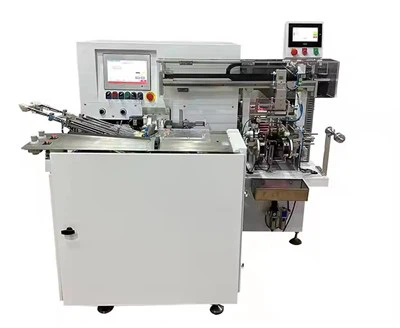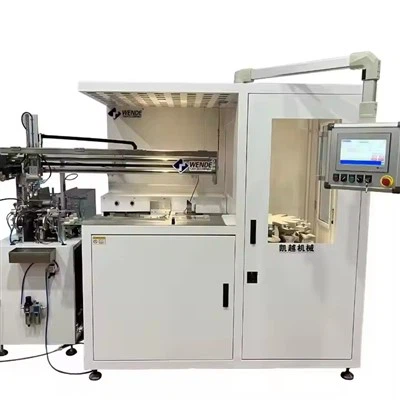

Automatic toothbrush machines play a crucial role in the production of toothbrushes, catering to the high - demand consumer market. As a reliable supplier of automatic toothbrush machines, I'd like to introduce you to the various types available in the market.
Manual Toothbrush Making Machines
Manual toothbrush making machines are a great starting point for small - scale production or for those who are new to the toothbrush manufacturing industry. These machines are relatively simple in design and operation. They usually require some level of human intervention at different stages of the production process.
For example, when it comes to bristle insertion, an operator might need to place the bristles in the designated holes on the toothbrush head manually or with the assistance of simple tools. The molding of the toothbrush handle can also be a semi - manual process, where the machine provides the basic framework, but the operator has to ensure proper alignment and finishing.
One of the advantages of manual toothbrush making machines is their low cost. They are affordable for small businesses or startups with limited capital. They also offer a certain degree of flexibility, as operators can make adjustments easily during the production process. However, the production speed is relatively slow compared to fully automatic machines, and the quality might be more inconsistent due to human error. If you are interested in exploring this type of machine, you can visit our Toothbrush Machine page for more details.
Semi - Automatic Toothbrush Machines
Semi - automatic toothbrush machines bridge the gap between manual and fully automatic machines. These machines automate some of the key processes in toothbrush production, while still requiring some human input.
In a semi - automatic machine, processes like bristle tufting can be automated to a large extent. The machine can precisely insert the bristles into the toothbrush head at a consistent depth and density. However, tasks such as loading the raw materials (plastic for the handle and bristles) and removing the finished toothbrushes might still need to be done by an operator.
The advantage of semi - automatic machines is that they offer a balance between cost and production efficiency. They are more productive than manual machines, as the automated processes reduce the time taken for certain tasks. At the same time, they are more affordable than fully automatic machines, making them a popular choice for medium - sized toothbrush manufacturers. You can find more information about semi - automatic machines on our Toothbrush Machine Making page.


Fully Automatic Toothbrush Machines
Fully automatic toothbrush machines are the pinnacle of toothbrush production technology. These machines can perform all the necessary processes in toothbrush manufacturing without any human intervention, from raw material feeding to the final packaging of the finished toothbrushes.
The process starts with the plastic injection molding of the toothbrush handle. The machine precisely controls the temperature, pressure, and injection speed to ensure high - quality handles. Then, the bristles are automatically inserted into the handle using advanced tufting technology. After that, the toothbrushes go through a series of quality control checks, such as checking the bristle alignment and handle integrity. Finally, the toothbrushes are packaged in a hygienic and efficient manner.
Fully automatic machines offer extremely high production speeds, which can meet the large - scale demand of the market. They also ensure consistent quality, as the processes are controlled by advanced software and sensors. However, they are more expensive to purchase and maintain. For large - scale toothbrush manufacturers who need to produce a large number of toothbrushes with high quality, fully automatic machines are the best choice. You can learn more about our fully automatic machines on our Industrial Brush Making Machine page.
Specialized Toothbrush Making Machines
Apart from the general types mentioned above, there are also specialized toothbrush making machines designed for specific types of toothbrushes.
Electric Toothbrush Making Machines
Electric toothbrushes have become increasingly popular in recent years due to their advanced cleaning technology. Electric toothbrush making machines are designed to assemble the complex components of electric toothbrushes, including the motor, battery, and control circuit. These machines require high - precision manufacturing techniques to ensure the proper functioning of the electric components. They also need to integrate the mechanical parts of the toothbrush, such as the brush head and handle, with the electrical components seamlessly.
Children's Toothbrush Making Machines
Children's toothbrushes have different design requirements compared to adult toothbrushes. They are usually smaller in size, with softer bristles and more colorful and attractive designs. Children's toothbrush making machines are customized to produce toothbrushes that meet these specific requirements. They can create smaller - sized handles, insert softer bristles, and add special features like cartoon - shaped handles or flavored bristles.
Bamboo Toothbrush Making Machines
With the increasing awareness of environmental protection, bamboo toothbrushes have gained popularity. Bamboo toothbrush making machines are designed to work with bamboo materials. They can cut, shape, and treat the bamboo to make toothbrush handles. These machines also need to be compatible with the process of attaching bristles to the bamboo handles, which might require different techniques compared to plastic handles.
Factors to Consider When Choosing an Automatic Toothbrush Machine
When choosing an automatic toothbrush machine, several factors need to be considered.
Production Capacity
The production capacity of the machine is a crucial factor. If you are a large - scale manufacturer with a high - volume order, you will need a machine with a high production speed, such as a fully automatic machine. On the other hand, if you are a small - scale producer or just starting out, a manual or semi - automatic machine might be more suitable.
Quality Requirements
The quality of the toothbrushes produced by the machine is also important. If you are targeting the high - end market, you need a machine that can produce toothbrushes with high - quality materials and precise manufacturing processes. Fully automatic machines and specialized machines are usually better at meeting high - quality requirements.
Cost
The cost of the machine includes not only the purchase price but also the operating and maintenance costs. Manual and semi - automatic machines are generally more affordable in terms of purchase price, but they might require more labor, which can increase the operating cost. Fully automatic machines are more expensive to buy, but they can reduce labor costs in the long run.
Technical Support
Good technical support is essential when purchasing an automatic toothbrush machine. You need to ensure that the supplier can provide timely maintenance, repair, and software updates. As a reliable supplier, we offer comprehensive technical support to our customers to ensure the smooth operation of their machines.
Conclusion
In conclusion, there are various types of automatic toothbrush machines available in the market, each with its own advantages and suitable for different production needs. Whether you are a small - scale startup or a large - scale manufacturer, there is a machine that can meet your requirements.
If you are interested in purchasing an automatic toothbrush machine or have any questions about our products, please feel free to contact us for a detailed discussion. We are committed to providing you with the best - quality machines and excellent service to help you succeed in the toothbrush manufacturing industry.
References
- "Toothbrush Manufacturing Technology" - Industry Report
- "Advances in Automatic Machine Design for Toothbrush Production" - Journal of Manufacturing Science
- "Environmental Considerations in Toothbrush Production" - Sustainability Research Journal