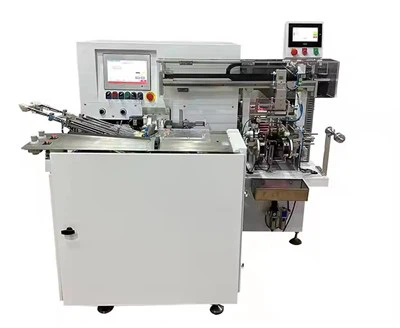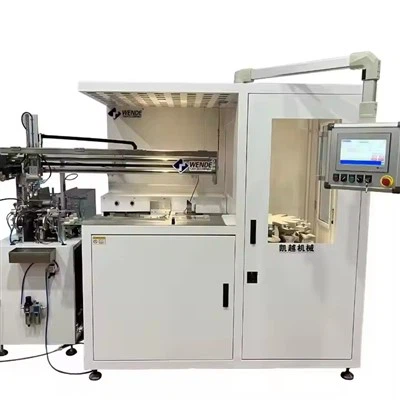

As a supplier of household brush tufting machines, one of the most frequently asked questions I receive is about the maximum tufting width of these machines. This parameter is crucial as it directly impacts the size and type of brushes that can be produced. In this blog, I'll delve into the factors influencing the maximum tufting width, the typical ranges, and how it relates to different types of household brushes.
Factors Influencing the Maximum Tufting Width
Machine Design and Structure
The physical design of the household brush tufting machine plays a significant role in determining the maximum tufting width. Machines are engineered with specific frame sizes, which limit the distance between the tufting heads. A larger frame can accommodate a wider tufting area, but it also requires more space in the production facility. For example, a compact machine designed for small - scale production may have a relatively narrow tufting width, while a large - scale industrial machine can have a much wider one.
Tufting Technology
Different tufting technologies have varying capabilities when it comes to tufting width. Traditional mechanical tufting machines may have limitations due to the mechanical components involved. In contrast, advanced CNC (Computer Numerical Control) tufting machines offer more flexibility. CNC technology allows for precise control of the tufting process, enabling wider tufting widths with high accuracy. The CNC Broom Tufting Machine is a prime example of a machine that benefits from this technology, offering a relatively wide tufting width for broom production.
Material and Brush Type
The type of material used for tufting and the final brush product also influence the maximum tufting width. For instance, if you are making brushes with soft bristles, a wider tufting width may be achievable as the bristles are more flexible. However, when using stiff materials, a narrower tufting width might be necessary to ensure proper tufting and brush quality. Different types of household brushes, such as Household Cleaning Brushes Making Machine and Electric Toothbrush Making Machine, have different requirements for tufting width. Toothbrushes typically require a narrow tufting width due to their small size, while cleaning brushes can have a wider range depending on their intended use.
Typical Ranges of Maximum Tufting Width
Small - Scale Household Brush Tufting Machines
For small - scale household brush production, the maximum tufting width usually ranges from 50mm to 200mm. These machines are often used for making small brushes like toothbrushes, makeup brushes, or small cleaning brushes. They are suitable for home - based businesses or small workshops with limited space and production volume.
Medium - Scale Machines
Medium - scale household brush tufting machines can have a maximum tufting width between 200mm and 500mm. These machines are capable of producing a wider variety of brushes, including larger cleaning brushes, brooms, and some industrial - style brushes. They are commonly used in medium - sized manufacturing facilities.
Large - Scale Industrial Machines
Large - scale industrial household brush tufting machines can achieve a maximum tufting width of 500mm or more. These machines are designed for high - volume production and can handle a wide range of brush sizes. They are often used in large factories that produce a large quantity of brushes for commercial and industrial applications.
Importance of Maximum Tufting Width in Brush Production
Productivity
A wider tufting width means that more bristles can be tufted in a single pass, increasing the production speed. This is especially important for large - scale production, where time is a crucial factor. For example, a machine with a wide tufting width can produce a larger number of brooms in a shorter period compared to a machine with a narrow tufting width.
Brush Variety
The maximum tufting width also determines the variety of brushes that can be produced. A machine with a wide tufting width can produce larger brushes, such as floor brooms or large - sized cleaning brushes. On the other hand, a machine with a narrow tufting width is better suited for small - sized brushes like toothbrushes or nail brushes.
How to Choose the Right Maximum Tufting Width for Your Business
Production Volume
If you have a high - volume production requirement, a machine with a wider tufting width is recommended. This will allow you to produce more brushes in less time, increasing your overall productivity. However, if your production volume is low, a machine with a narrower tufting width may be sufficient and more cost - effective.
Brush Types
Consider the types of brushes you plan to produce. If you are focusing on small - sized brushes like toothbrushes, a machine with a narrow tufting width will be appropriate. For larger brushes such as brooms or large cleaning brushes, a machine with a wider tufting width is necessary.
Budget
The cost of a household brush tufting machine is often related to its maximum tufting width. Machines with wider tufting widths are generally more expensive. Therefore, you need to balance your budget with your production requirements.


Conclusion
The maximum tufting width of a household brush tufting machine is a critical factor that affects the production capacity, product variety, and overall efficiency of brush manufacturing. As a supplier, I understand the importance of providing machines that meet the diverse needs of our customers. Whether you are a small - scale producer or a large - scale industrial manufacturer, we have a range of machines with different maximum tufting widths to suit your requirements.
If you are interested in purchasing a household brush tufting machine or have any questions about the maximum tufting width and its suitability for your business, please feel free to contact us. We are more than happy to assist you in making the right choice for your brush production needs.
References
- Industry reports on household brush manufacturing technology.
- Technical specifications of various household brush tufting machines.