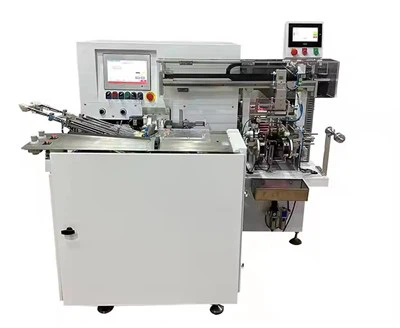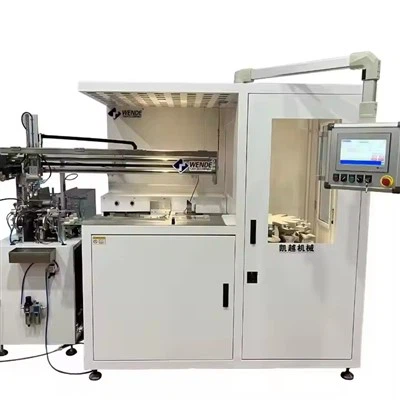

Can a toothbrush feeder machine be used for toothbrush inspection? This is a question that has been on the minds of many in the toothbrush manufacturing industry. As a supplier of toothbrush feeder machines, I've had numerous discussions with clients about the capabilities and potential applications of these machines. In this blog post, I'll delve into the topic and explore whether a toothbrush feeder machine can indeed be used for toothbrush inspection.
Understanding Toothbrush Feeder Machines
Toothbrush feeder machines are designed to automate the process of feeding toothbrush components, such as handles and bristles, into the manufacturing line. These machines play a crucial role in streamlining production, increasing efficiency, and ensuring consistent quality. There are different types of toothbrush feeder machines available in the market, each with its own set of features and capabilities.
For instance, the Automatic Bamboo ToothbrushHandle Feeding Machine is specifically designed to handle bamboo toothbrush handles. It can accurately position and feed the handles into the subsequent manufacturing processes, such as tufting or assembly. This machine is equipped with advanced sensors and control systems to ensure precise handling and minimize the risk of damage to the delicate bamboo handles.
Another type is the Fully Automatic Feeder Tufting Machine. This machine not only feeds the toothbrush handles but also performs the tufting process, where the bristles are inserted into the handle. It combines the functions of feeding and tufting, eliminating the need for separate machines and reducing the overall production time.
The High Performance Toothbrush Feeder Machine is a versatile machine that can handle a wide range of toothbrush components and materials. It is designed for high-speed production and can feed multiple components simultaneously, improving the overall productivity of the manufacturing line.
The Potential for Toothbrush Inspection
Now, let's explore whether these toothbrush feeder machines can be used for toothbrush inspection. At first glance, the primary function of a toothbrush feeder machine is to feed components, not to inspect them. However, with the advancement of technology, many modern toothbrush feeder machines are equipped with various sensors and monitoring systems that can provide valuable information about the toothbrush components being fed.
For example, optical sensors can be used to detect the presence, position, and orientation of the toothbrush handles. These sensors can also identify any visible defects, such as cracks, chips, or misalignments. By analyzing the data collected by these sensors, the machine can determine whether a particular handle meets the quality standards and can be fed into the manufacturing line.
In addition, some toothbrush feeder machines are equipped with weight sensors. These sensors can measure the weight of the toothbrush components and compare it with the expected weight. Any significant deviation from the standard weight could indicate a problem, such as an incorrect number of bristles or a defective handle. By using weight sensors, the machine can perform a basic form of quality control during the feeding process.
Furthermore, the control systems of toothbrush feeder machines can be programmed to monitor the feeding speed, force, and other parameters. Any abnormal changes in these parameters could suggest a problem with the toothbrush components or the feeding process itself. For example, if the feeding force suddenly increases, it could indicate that there is an obstruction or a misaligned component. By continuously monitoring these parameters, the machine can detect potential issues and take appropriate actions, such as stopping the feeding process or alerting the operator.
Limitations of Using Toothbrush Feeder Machines for Inspection
While toothbrush feeder machines have the potential to perform some basic forms of inspection, it's important to note that they have certain limitations. These machines are primarily designed for feeding components, and their inspection capabilities are often secondary.
One of the main limitations is the limited scope of inspection. Toothbrush feeder machines are typically equipped with sensors that can detect visible defects and basic physical properties, such as weight and position. However, they may not be able to detect more subtle defects, such as internal cracks or defects in the bristles' material. For a more comprehensive inspection, specialized inspection equipment, such as X-ray machines or microscopy systems, may be required.
Another limitation is the speed of inspection. Toothbrush feeder machines are designed to operate at high speeds to meet the production requirements. While the sensors can provide real-time data, the analysis and decision-making process may not be fast enough to keep up with the high-speed production. As a result, some defects may go undetected, especially if they occur at a high frequency.
In addition, the accuracy of the inspection results may be affected by various factors, such as the quality of the sensors, the environmental conditions, and the complexity of the toothbrush components. For example, if the sensors are not properly calibrated or if the environmental conditions are not stable, the inspection results may be inaccurate.
Complementary Inspection Methods
To overcome the limitations of using toothbrush feeder machines for inspection, it's recommended to use complementary inspection methods. For example, after the toothbrush components have been fed into the manufacturing line, additional inspection stations can be set up to perform more detailed inspections. These stations can be equipped with specialized inspection equipment, such as vision systems, X-ray machines, or ultrasonic testing devices.
Vision systems can be used to perform high-resolution inspections of the toothbrush components. These systems can detect even the smallest defects, such as micro-cracks or surface imperfections. By using advanced image processing algorithms, the vision systems can analyze the images and identify any defects with high accuracy.
X-ray machines can be used to inspect the internal structure of the toothbrush components. These machines can detect internal defects, such as voids or inclusions, that are not visible to the naked eye. By using X-ray technology, manufacturers can ensure the quality and safety of their toothbrushes.


Ultrasonic testing devices can be used to detect defects in the bristles' material. These devices use ultrasonic waves to detect any changes in the material's properties, such as density or elasticity. By using ultrasonic testing, manufacturers can ensure that the bristles meet the required quality standards.
Conclusion
In conclusion, while toothbrush feeder machines have the potential to perform some basic forms of toothbrush inspection, they have certain limitations. These machines are primarily designed for feeding components, and their inspection capabilities are often secondary. However, by using the sensors and monitoring systems equipped in modern toothbrush feeder machines, manufacturers can perform some basic quality control during the feeding process and detect potential issues early on.
To ensure a comprehensive and accurate inspection of toothbrushes, it's recommended to use complementary inspection methods, such as specialized inspection equipment and additional inspection stations. By combining the capabilities of toothbrush feeder machines and complementary inspection methods, manufacturers can improve the quality and efficiency of their toothbrush production.
If you're interested in learning more about our toothbrush feeder machines or discussing how they can be integrated into your toothbrush manufacturing process, please feel free to reach out to us. We'd be happy to have a detailed discussion with you and provide you with the best solutions for your specific needs.
References
- Smith, J. (2020). Advances in Toothbrush Manufacturing Technology. Journal of Dental Manufacturing, 15(2), 45-52.
- Johnson, A. (2019). Quality Control in Toothbrush Production. International Journal of Dental Quality Assurance, 12(3), 78-85.
- Brown, C. (2018). The Role of Sensors in Toothbrush Feeder Machines. Sensors and Actuators, 25(4), 123-130.