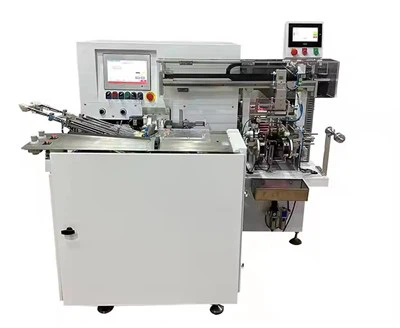

Hey there! As a supplier of toothbrush feeder machines, I'm super excited to share with you the working principle of these nifty devices. Toothbrush feeder machines play a crucial role in the toothbrush manufacturing process, making production more efficient and consistent. So, let's dive right in and explore how they work.


The Basics of a Toothbrush Feeder Machine
A toothbrush feeder machine is designed to handle and feed various components of a toothbrush during the manufacturing process. These components can include toothbrush handles, bristles, and sometimes even packaging materials. The main goal of the feeder machine is to ensure that these components are delivered to the right place at the right time, in the correct orientation, and in the proper quantity.
How the Toothbrush Feeder Machine Works
1. Component Loading
The first step in the working process of a toothbrush feeder machine is loading the components. This can be done manually or automatically, depending on the type of machine and the specific requirements of the production line. For example, toothbrush handles can be loaded into a hopper or a magazine, which is a storage container that holds the components in an organized manner. The hopper or magazine is designed to feed the components one by one to the next stage of the process.
2. Orientation and Sorting
Once the components are loaded, the feeder machine needs to ensure that they are in the correct orientation. This is important because the subsequent manufacturing processes, such as tufting or assembly, require the components to be in a specific position. The feeder machine uses various techniques to orient and sort the components. For instance, it may use sensors, mechanical guides, or vibration to align the toothbrush handles or bristles in the right direction.
3. Feeding Mechanism
After the components are oriented and sorted, the feeder machine uses a feeding mechanism to move them along the production line. This mechanism can be a conveyor belt, a vibratory feeder, or a robotic arm. The conveyor belt is a common choice for transporting toothbrush handles and other large components. It moves the components at a constant speed, allowing them to be processed at each stage of the manufacturing process.
The vibratory feeder, on the other hand, uses vibrations to move the components. It is often used for smaller components, such as bristles. The vibrations help to separate the components and move them along a track or chute.
Robotic arms are another option for feeding components. They can be programmed to pick up and place the components with high precision. This is particularly useful for complex assembly tasks or when dealing with delicate components.
4. Integration with Other Machines
A toothbrush feeder machine is usually part of a larger manufacturing system. It needs to be integrated with other machines, such as tufting machines, molding machines, and packaging machines. The feeder machine communicates with these other machines to ensure that the components are delivered at the right time and in the right quantity. For example, when the tufting machine is ready to receive a toothbrush handle, the feeder machine will send one over.
Types of Toothbrush Feeder Machines
There are several types of toothbrush feeder machines available on the market, each with its own unique features and capabilities.
Fully Automatic Feeder Tufting Machine
The Fully Automatic Feeder Tufting Machine is a high - tech device that combines the functions of a feeder and a tufting machine. It can automatically feed the toothbrush handles and bristles, and then tuft the bristles onto the handles. This type of machine is very efficient and can significantly increase the production speed.
Automatic Bamboo Toothbrush Handle Feeding Machine
The Automatic Bamboo Toothbrush Handle Feeding Machine is specifically designed for handling bamboo toothbrush handles. Bamboo is a natural and eco - friendly material, and this machine can ensure that the bamboo handles are fed accurately and efficiently during the manufacturing process.
Special Holes Toothbrush Tufting Machine
The Special Holes Toothbrush Tufting Machine is used for creating toothbrushes with special hole patterns. The feeder part of this machine is responsible for feeding the toothbrush handles with the correct orientation so that the tufting process can create the desired hole patterns.
Advantages of Using a Toothbrush Feeder Machine
- Increased Efficiency: By automating the component feeding process, toothbrush feeder machines can significantly increase the production speed. They can handle a large number of components in a short period of time, reducing the overall manufacturing time.
- Consistency: Feeder machines ensure that the components are fed in a consistent manner. This means that each toothbrush produced will have the same quality and specifications, leading to a more reliable product.
- Reduced Labor Costs: Since the feeder machine automates the feeding process, it reduces the need for manual labor. This can save a lot of money for toothbrush manufacturers, especially in the long run.
- Improved Safety: Manual handling of components can be dangerous, especially when dealing with sharp objects like bristles. Toothbrush feeder machines eliminate the need for direct human contact with these components, reducing the risk of injuries.
Conclusion
Toothbrush feeder machines are an essential part of the toothbrush manufacturing process. They work by loading, orienting, sorting, and feeding the components of a toothbrush in an efficient and consistent manner. With different types of feeder machines available, such as the Fully Automatic Feeder Tufting Machine, Automatic Bamboo Toothbrush Handle Feeding Machine, and Special Holes Toothbrush Tufting Machine, manufacturers can choose the one that best suits their needs.
If you're in the toothbrush manufacturing business and looking to improve your production efficiency, a toothbrush feeder machine is definitely worth considering. Whether you're a small - scale producer or a large - scale manufacturer, these machines can help you streamline your production process and produce high - quality toothbrushes. So, if you're interested in learning more about our toothbrush feeder machines or have any questions about the purchasing process, feel free to reach out to us. We're here to help you find the perfect solution for your business.
References
- Toothbrush Manufacturing Handbook
- Industry Reports on Toothbrush Production Technologies