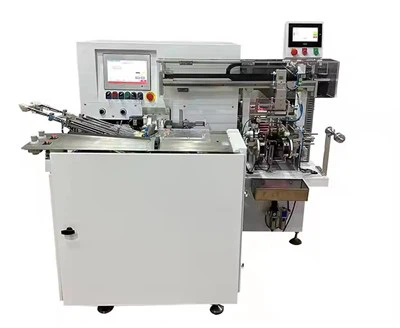

Hey there! As a supplier of Household Brush Making Machine, I often get asked if our machines can produce brushes with different densities of bristles. Well, the short answer is yes! But let's dive deeper into this topic and explore how it all works.
Understanding Bristle Density
First things first, what exactly do we mean by the density of bristles? Bristle density refers to the number of bristles per unit area on a brush. It's a crucial factor that affects the performance and functionality of a brush. For example, a brush with high bristle density is great for tasks that require more scrubbing power, like cleaning stubborn stains. On the other hand, a brush with low bristle density might be better for tasks that need a lighter touch, such as dusting.
How Our Machines Achieve Different Bristle Densities
Our Household Brush Making Machine is designed with advanced technology that allows for precise control over the bristle tufting process. Here are some of the ways we can adjust the bristle density:
1. Tufting Pattern Adjustment
The tufting pattern plays a significant role in determining the bristle density. Our machines can be programmed to create different tufting patterns, such as single-row, multi-row, or random patterns. By changing the pattern, we can effectively control how closely the bristles are packed together. For instance, a multi-row tufting pattern will generally result in a higher bristle density compared to a single-row pattern.
2. Bristle Feed Rate
Another way to adjust the bristle density is by controlling the bristle feed rate. Our machines have a variable bristle feed system that allows us to increase or decrease the amount of bristles being fed into the tufting mechanism. If we increase the feed rate, more bristles will be inserted into each tuft, resulting in a higher bristle density. Conversely, decreasing the feed rate will lead to a lower bristle density.
3. Tufting Needle Size and Spacing
The size and spacing of the tufting needles also affect the bristle density. We offer a range of tufting needles with different diameters and spacing options. Using a smaller needle diameter and closer needle spacing will result in a higher bristle density, as more bristles can be packed into a smaller area.
Benefits of Producing Brushes with Different Bristle Densities
Now that we know how our machines can produce brushes with different bristle densities, let's take a look at some of the benefits:
1. Versatility
By being able to produce brushes with different bristle densities, we can cater to a wide range of customer needs. Whether it's a heavy-duty cleaning brush or a delicate dusting brush, our machines can handle it all. This versatility gives our customers more options and allows them to offer a diverse range of products to their own customers.
2. Improved Performance
Different tasks require different levels of scrubbing power and flexibility. A brush with the right bristle density for the job will perform better and be more effective. For example, a high-density brush can remove tough grime and dirt, while a low-density brush can gently clean sensitive surfaces without causing damage.
3. Cost-Effectiveness
Producing brushes with different bristle densities can also be cost-effective. Instead of having to purchase multiple machines for different types of brushes, our customers can use a single Household Brush Making Machine to produce a variety of brushes. This reduces the initial investment and operating costs.
Real-World Applications
Let's take a look at some real-world applications of brushes with different bristle densities:
1. Household Cleaning
In the household cleaning industry, brushes with different bristle densities are used for various tasks. A high-density scrub brush is perfect for cleaning the bathroom floor or kitchen countertops, while a low-density dusting brush can be used to clean furniture and electronics.
2. Industrial Cleaning
In industrial settings, brushes with different bristle densities are used for heavy-duty cleaning and maintenance. High-density brushes can be used to clean large machinery and equipment, while low-density brushes can be used for more delicate cleaning tasks, such as cleaning electronic components.
3. Personal Care
Brushes with different bristle densities are also used in the personal care industry. For example, a high-density hairbrush can be used to detangle thick hair, while a low-density brush can be used for styling and adding volume.
Our Household Cleaning Brushes Tufting Machine and Household Cleaning Brushes Making Machine
In addition to our general Household Brush Making Machine, we also offer specialized machines for household cleaning brushes. Our Household Cleaning Brushes Tufting Machine and Household Cleaning Brushes Making Machine are designed to meet the specific needs of the household cleaning industry. These machines are highly efficient and can produce high-quality brushes with different bristle densities.
Conclusion
So, to answer the question, yes, our Household Brush Making Machine can definitely produce brushes with different densities of bristles. Thanks to our advanced technology and precise control over the tufting process, we can create brushes that meet the diverse needs of our customers. Whether you're in the household cleaning, industrial cleaning, or personal care industry, our machines can help you produce high-quality brushes with the right bristle density for the job.
If you're interested in learning more about our Household Brush Making Machine or any of our other products, please don't hesitate to get in touch. We'd be happy to discuss your specific requirements and provide you with a customized solution. Let's work together to take your brush production to the next level!


References
- Brush Manufacturing Technology Handbook
- Industrial Brush Applications and Design